
2024
August 24
Workshop
Nov. 24
Symposium
Nov. 24
Symposium
2025
Nov. 9
Symposium
Dec. 27
Symposium
Dec. 27
Symposium
In a 1992 letter published as part of the promotional material for the Dance Opera “The Children’s Crusade,” on which he collaborated with Marta Binetti, Ko Murobushi writes, in a postscript: “Excuse me, my English is broken. I hope something different, coming out from the breaks. I let my pen with expectations” (Murobushi, “Texts for ‘Children’s Crusade’”).
In this presentation, I linger with the breaks, allow (myself) to be ‘lost in translation’ and to lose my self in translation and yet to find (other) things in there, dwell in the moments when language might not fully ‘make meaning’ but nevertheless does ‘make sense,’ as well as in the moments when language is decentered altogether to ‘make place’ or to ‘make space’ for something else—or, in Ko’s words (though I resist the idea that words ever fully belong to one—‘something different.’
Before I dwell further into the breaks of language, let me break the flow of this presentation to start with an anecdote. While I first saw Ko perform ‘live,’ ‘in person’ in Vienna in 2012, I did not get to meet ‘him’—in person and/or as a person—until 2014, when I took part in his research project “Les Innombrables Nijinski” at ImpulsTanz. At the time, I already had a foot in Japan and a foot elsewhere (in this case, in Vienna), finding—or perhaps more accurately, losing—(myself) in-between places and in-between languages, unsure what to answer when people asked me where I lived—a situation which, I would come to learn, was not fully dissimilar to Ko’s situation. Though the research project took place in English—or, perhaps more accurately, in the version of English that some would call ‘international English’ and that some others might describe, less charitably, as ‘broken English’—I came to the space partly able to understand Japanese though almost fully unable to speak it (in this regard, things have not changed much in the past decade, which is why I am giving this presentation in English.)
While many things could be said about “Les Innombrables Nijinski,” what I want to highlight here is that I first encountered Ko in-between languages. Indeed, if the research project ‘took place’ in English, being able to understand Japanese—if only partially—gave me access to another facet of Ko, which revealed itself in the (private) conversations between Ko and Kimiko—which took place in Japanese, and whose content was often intentionally left untranslated. The way in which I encountered Ko in Vienna, re-encountered him in Tokyo, and perhaps more importantly, continued to encounter him after his death, first in his apartment and then at Shy, echoes, on some level, the way in which Ko described himself in his writings: as a traveler, as an outsider, as someone forever in-between languages and in-between places.
In the letter that precedes the postscript with which I opened this presentation, Ko writes:
I talk very quickly. I should talk more quicker than words.
To forget, to disappear from my culture.
To remember, to appear into my culture.
I should shift, I should bound…It’s stupid if I remain in one side with my mother language, in the words in community.
I should break my cultural body to talk.Now, the most beautiful way is a <bi> is a bilingual, is a binary stars, like us!!
We are always speaking in a bilabial, we are always moving in a bilateral.
Important thing, there is some Ethic!Ko is Ko and he is not Ko.
He is a Butoh dancer and he forgets it in a same way he is Japanese and he is a foreigner for Japanese.This split is not only in Two, in you & me!
To feel, to speak in plural, innumerable directions.
With sensitive and wild bodies. (Murobushi, “Texts for ‘Children’s Crusade’”)
In preparing this presentation, I kept finding myself drawn to this text, not solely because it is written in English, a language more accessible to me than Japanese, but because it shows the importance of questions of language and translation in Ko’s work. Whereas language—in this case, English language—situates Ko as ‘Ko,’ as ‘Japanese’ and as a ‘Butoh dancer,’ Ko’s text appears to me as a desperate attempt to break the cages that those words represent—as a desperate attempt to write (himself) outside of ‘his’ culture, outside of ‘his’ self, outside of butoh. In his writings and in his dance, Ko sought “to speak, to feel in plural, innumerable directions./With sensitive and wild bodies” (Murobushi, “Texts for ‘Children’s Crusade’”). To speak, to feel and to dance as a body—or as bodies in the plural—at once sensitive and wild, Ko saw the need to “break his cultural body,” to break language and to break dance, so that “something different,” something unknown, could emerge from the breaks. Interestingly, in this text, Ko invokes “Ethic,” and I want to draw a connection between his invocation of Ethic and philosopher Ludwig Wittgenstein’s definition of ethics (in his lecture on ethics) as a “running up against the limits of language,” as an “attempt to say something that cannot be said” (qtd. in Ferrari 145). With his dance and with his words, I believe that Ko attempted to run up, at full speed, against the limits of language and the limits of dance, reinventing language and dance from the breaks, outside of existing agreed-upon definitions—reinventing himself as “something different” than a self.
As an autistic scholar turning to butoh to explore questions of disability and neurodivergence, and turning to neurodivergence and disability to consider butoh, Ko could appear, at first glance, as a ‘marginal’ case—an outlier or dare I say an outsider—in my project in that his work engages disability and neurodivergence in less ‘direct’ ways than, for example, people such as Hijikata Tatsumi or Ishii Mitsutaka. Yet, I believe that there is a case to be made about silence and incapacity being central to Ko’s work, which, if it does not make his work about disability and neurodivergence, nevertheless makes it possible to consider his work through the lenses of disability and neurodivergence. That is, whereas Ko might not have considered his work to have much to do with disability and neurodivergence, his turn to silence and incapacity, his stepping—or, to make a link to the theme of his symposium, his mis/stepping, his faux pas, or his falling—into the breaks and the cracks of language, makes his work particularly relevant to thinking about the relationship between disability/neurodivergence and dance.
To make this connection between his work and disability/neurodivergence, I want to briefly invoke the words of autistic writer and scholar Steacy Easton, who writes, in their anecdotal abecedarium of autism, about autism being a “problem in translation” (99). In Easton’s abecedarium, a stands for alienation. They write: “The alienation of those on the spectrum is an alienation of translation, a failure of translation. Not knowing the words, the nonwords, the physicality and the sociality—this pushes people on the spectrum away from people who are off it” (Easton 99). To be autistic, in their account (which echoes my experience) is to know neither the words, nor the nonwords, neither the physicality, nor the sociality that neurotypicality prescribes. (To give a very brief definition, neurotypicality is a term that originated within the Autistic community to refer to the idea of a ‘normal’ brain or mind against which neurological differences, including autism, have been constructed, but which has been used, more recently, by scholars such as philosopher Erin Manning to refer to a pervasive yet unspoken form of identity politics with devastative consequences “for anyone who doesn’t easily fit within the parameters it sets to frame the human” (51). That is, neurotypicality is a system that favors a certain way of being in the world at the expense of all others.) And when ‘the human’ is defined in narrow and neurotypical terms, for some of us, to misstep, to faux pas, to remain on the outside, is the only option.
In refusing to remain on the side of his mother tongue, in attempting to “break [his] cultural body to talk” and in breaking language and dance to reach a dance or a body with no name, Ko chose the side of the outside, and, in so doing, (mis)stepped on the side of the outsiders, which, whether or not it was intentional, can be regarded as both an ethical gesture and as a gesture of solidarity.
In a 1990 text, which he scribbled, in Japanese, in the Parisian subway, Ko writes (and this is a (mis)translation based on my (mis)understanding of his words), that solidarity is not to be found on the side of any existing tradition, but will be achieved in a (non-)place which might or might not exist. In the next sentence, he links it to the idea of “Capturing the nikutai’s latent power in its primal flow—wild, innocent, and still able to overturn education” (Murobushi Ko Shuhei 122), for, as he later asserts, there are things which “cannot be robbed by education and culture” (Murobushi Ko Shuhei 122). From this passage, it seems that, for Ko, solidarity can be achieved when we encounter each other as others, outside of the prescribed roles and rules which neurotypicality enforces. When we encounter each other as nikutai unconstrained by social and cultural norms, unburned by education, rather than as social bodies.
While a fuller discussion of his work is beyond the scope of this presentation—in their abecedarium, Steacy Easton states that a problem with autistic people is that they always want to tell you everything, and I don’t think that they are wrong on this—a central influence on my thinking on autism and the body is French educator and writer Fernand Deligny, who dedicated part of his life to living in the close presence of a small group of (mainly nonspeaking) autistic individuals in the Cevennes region of France. Living in the close presence of nonspeaking autistic individuals in an era when psychoanalysis enforced a definition of ‘the human’ which centered the ability to speak, Deligny also felt the need to break language to make space for nonspeaking autistic individuals within ‘the human.’ If I mention Deligny here, it is, in part, because he distinguished between two visions of ‘the human’: what he termed “the-human-that-we-are [l’homme que nous sommes]” and which corresponds to how (neurotypical) society most often defines the human—that is man as a speaking being, as its own project—, and “the human of the species [l’humain d’espèce]” (49). For him, whereas the first one is shaped by “education memory [la mémoire d’éducation],” the latter refers to ‘the human’ that pre-exists the memory of education and which the memory of education can never fully overturn (54-57).
To me, this has a lot to do with Ko’s discussion of solidarity: I believe that solidarity, in Ko’s work, is solidarity that extends beyond “the-human-that-we-are” to reach “the human of the species”—and that extends even beyond the human species. It is solidarity not solely between ‘social’ being, but solidarity that seeps through the cracks, beyond limiting definitions of ‘the human’ always bound to leave some of us outside. In his attempt to “find something different, coming out from the breaks” of language, I believe that Ko opened up a space—a silent space, or a space of silence—for others, including disabled and neurodivergent others, to exist within butoh—and this, likely without fully ever intending to do so.
In his work, in his words, and in the dance studio—as well as outside and in-between them—I believe that Ko extended all of us an invitation to perform experiments in subtraction, to consider what language, the body or dance can be when they do not have to conform to existing definitions. This is what he did in the text for “The Children’s Crusade,” which I mentioned already, where he invited us to imagine a Ko that is at once Ko and not Ko, a Ko stripped of his name and of his identity, of his culture and of his profession. And this is what he also did in another text, written in Japanese in 1990 and published as part of his 2018 Collected Works. There, writing about butoh’s origins, Ko continues his experiments in subtraction, proposing that butoh might represent “dance minus dance,” in the same way at John Cage’s 4’33” represented “music minus music” (Murobushi Ko Shuhei 178). Whereas one might be quick to assume that if music minus music amounts to silence, dance minus dance would amount to stillness, what interests me in that text is that for Ko, butoh as a “dance minus dance” amounts not to stillness, but to the silent body, or, perhaps more precisely, to the body that silences [沈黙する身体] (Murobushi Ko Shuhei 178). Whereas in English, “to silence” only exists as a transitive verb—silence as a verb being something that is imposed by someone on someone (else)—in the sentence written by Ko, it seems to me that silence unfolds as an intransitive verb—the same verb, perhaps, which Wittgenstein uses at the end of the Tractatus where he writes (brace yourself for the sound of German being broken) “Wovon man nicht sprechen kann, darüber muss man schweigen” (that is, in (English) translation, “Whereof one cannot speak, thereof one must be silent” (90) except for the fact that in the original German sentence silence is an intransitive verb). Reading Ko’s text, I believe that it is possible to argue—or, if not to argue, at least to imagine—that butoh is silence unfolding as an intransitive verb in the realm of the body, or, perhaps, silence as an intransitive verb undoing dance as it did—or undid—with music in the case of John Cage’s piece. For Ko, this ‘silent body’ or this ‘body that silences’ is the origin of butoh, Hijikata’s desperately standing corpse.
I have almost reached the end of this presentation, and while I have barely scratched the surface—while there is still so much that could be said, and so much more I still wanted to say—I want to end on a proposition which centers silence. If butoh scholar Sondra Fraleigh proposed that Hijikata “attempted to give voice to those on the margins of society, giving songs to those who don’t have voices” (22)—a sentence with which I have been grappling for a very long time—I want to propose that Ko’s work, both his dance and his writings, offered ‘something different’: silence as an intransitive verb and as an ethical space.
While one could think that silence is the last thing that minoritarian people—including and perhaps especially disabled and neurodivergent people—need or want, I believe that this is based on a fundamental misunderstanding of what silence is and can be. While it Is true that there might not be much to redeem I silence as a transitive verb, as something that is constantly imposed upon minoritarian individuals, recent work by autistic and otherwise neurodivergent scholars and artists has highlighted the possibilities offered by silence when the term is not limited to and by neurotypical definitions.
In their book Queer Silence: On Disability and Rhetorical Absence, autistic scholar J. Logan Smilges points to the generative possibilities of silence. Building upon Jacques Derrida’s assertion that silence does not represent the absence or the opposite of language, but rather “is that which bears and haunts language, outside and against which alone language can emerge” (cite)—an outside that blurs the distinction between inside and outside—and Michel Foucault’s assertion that silence is not singular, but rather multiple, plural, Smilges points to silence rhetorical potential, to the multiple ways in which queer and crip people’s silence can be louder than their/our words, without complying to injunctions of legibility. In Smilges’ work, queer silence (which is always-already also crip and neuroqueer silence), while not always radical or resistant—though it can be—can also be a space of respite. I believe that Ko’s work opened a door onto silence conceived not as an absence of meaning or sound, but rather as a space of darkness in which we can, if just for a moment, exist as bodies at once sensitive and wild. For Smilges, “the openness of silence, its potential to mean” is often “prematurely foreclosed by presumptions about its relationship to voicelessness, to limited representation, and to invisibility” (35). Ko’s dance, to me, opens a door onto silence in its openness, and in so doing, makes this space accessible to those of us who desperately need it.
In Ko’s work, Butoh, rather than an existing form, represented an ethical space in which not only dance but also existence, could be reimagined in and on other terms, as something always different, coming from the breaks.
Works Cited:
Deligny, Fernand. A comme asile; suivi de, Nous et l’innocent. Dunod, 1999.
Easton, Steacy. “Autism: An Anecdotal Abecedarium.” kadar koli, vol. 8, 2013, pp. 99-108.
Ferrari, Massimo. “After the Tractatus: Schlick and Wittgenstein on Ethics.” Wittgenstein and the Vienna Circle: 100 Years after the Tractatus, edited by Friedrich Stadler, Springer, 2023, pp. 127-160.
Fraleigh, Sondra H.. Butoh: metamorphic dance and global alchemy. Illinois University Press, 2010.
Manning, Erin. For a pragmatics of the useless. Duke University Press, 2020.
Murobushi, Ko. Texts for ‘Children’s Crusade. Text written in 1992. https://ko-murobushi.com/biblio_selves/p6860/.
Murobushi, Ko. 室伏鴻集成 [Murobushi Ko Shusei]. Kawade Shobo Shinsha, 2018.
Smilges, J. Logan. Queer silence: On disability and rhetorical absence. U of Minnesota Press, 2022.
Wittgenstein, Ludwig. Tractatus Logico-Philosophicus. Translated by C. K. Ogden, Chiron Academic Press, 2016.
This work was supported by JSPS KAKENHI Grant Number JP25K22950.
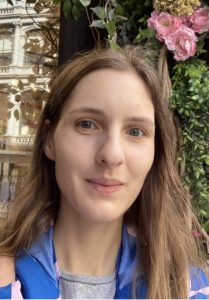
Julie Dind is an autistic scholar and interdisciplinary artist whose work autistically explores autistic modes of performance. She has a PhD in Theatre Arts and Performance Studies from Brown University, an MA in International Culture and Communication Studies from Waseda University, and an advanced certificate in Disability Studies from the City University of New York. She is currently a postdoctoral fellow at Tokyo College, the University of Tokyo, where she works on a KAKENHI-funded research project on butoh and disability.