
2024
August 24
Workshop
Nov. 24
Symposium
Nov. 24
Symposium
2025
Nov. 9
Symposium
Dec. 27
Symposium
Dec. 27
Symposium
During the process of providing editorial assistance for the catalogue of the exhibition Faux Pas, held in Vienna, I became keenly aware of the need to present accurate information about “Murobushi during his Dairakudakan period,” a phase that even researchers have rarely examined closely. In this dialogue, drawing on materials from the time and testimonies of those involved, we considered such questions as what aspects of Maro Akaji, the troupe’s founder, resonated with Murobushi—who had studied under Tatsumi Hijikata—and led him to participate in the founding of Dairakudakan, as well as what he gained from his collaborations with Ushio Amagatsu and others.
Furthermore, while encouraging a reconsideration of the concept of “cabaret” that Murobushi developed independently, we sought to shed renewed light on the diverse possibilities indicated by Dairakudakan in the 1970s, viewed through the illuminating lens of Murobushi.
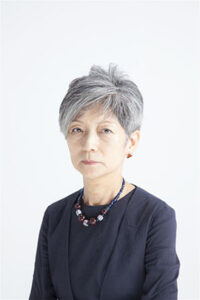
Dance researcher and critic. Served as a juror for the Toyota Choreography Award (2002–2004).
Her publications include Costumes of Dreams, Vessels of Memory: Dance and Modernism (Shinshokan, 2002). She also edited The Distance of Seeing: The Trajectory of Dance, 1962–1996, a posthumous collection of writings by Masashi Ichikawa (Shinshokan, 2000).
Her major essays include “A Study of The Ailing Dancing Girl: And a Desperate Longing” (in Tatsumi Hijikata: On Words and the Body, Kadokawa Gakugei Publishing, 2011), “The Eve of Ankoku Butoh: Postwar Japanese Modern Dance and Kazuo Ohno” (in Kazuo Ohno: Butoh and Life, Shichosha, 2012), and “On Yoshito Ohno’s Lecture-Performance The Shape of Life” (in Aging and Dance, Keiso Shobo, 2019).
She is the director of the Yamemahi no Kai (formerly “Maihime no Kai,” a research group on Tatsumi Hijikata).
Born in Tokyo, Japan. While still a university student, he joined the butoh group Sebi, led by Ko Murobushi, in 1980. He joined in works such as Mummy, Tarahumara Trans, and Butoh-Yamai no Sōshi, while also working in production for Sebi and Ariadone no Kai. The following year, he participated in the management of “Shy,” an experimental cabaret established by Murobushi.
He later worked on the editorial staffs of Monthly Playboy, Ballet, and Replique, and subsequently became a freelance editor.