
2024
August 24
Workshop
Nov. 24
Symposium
Nov. 24
Symposium
2025
Nov. 9
Symposium
Dec. 27
Symposium
Dec. 27
Symposium
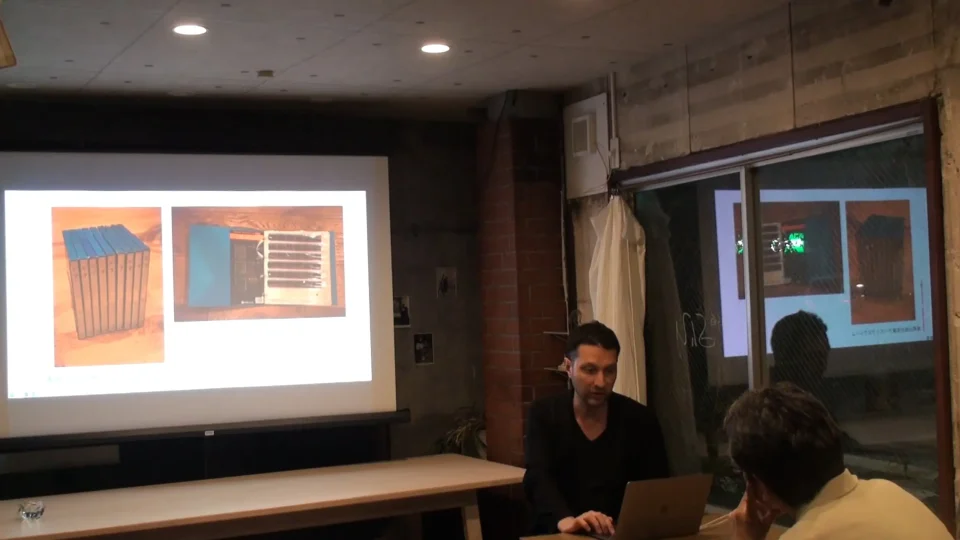
OsawaToday I would like to talk about exhibition-making from a practical perspective. I am not particularly knowledgeable about Butoh, although I have enjoyed watching it. Rather, my work has been in creating exhibitions. I have built archives, exhibited them, and considered what might come after that. In the course of this work, I have had various discussions with Watanabe-san about how Butoh in general—and Murobushi-san’s archive in particular—might be exhibited in the first place. Based on my past experience, I would like to present some of my thoughts on exhibition-making, and at the same time think together with you about how we might design future exhibitions of the Murobushi archive. Please feel free to stop me at any time; if you have questions or comments, do speak up.
First of all, in order to make an exhibition, you need something to exhibit. This is a very fundamental point, yet many people forget it. Some believe that an exhibition can be made with an idea alone, but no decent exhibition can be made with ideas alone. First, you need objects. And then you need techniques. Exhibition-making is a practical activity that requires various kinds of technical skill. So you need objects, you need the techniques to display them, and of course behind that there is what is now often called planning or curatorial work—the conceptual framework. And finally, equally necessary and important, is aesthetic sensibility: the ability to give form, to design. Only when all of these elements come together does an exhibition exist.
I am affiliated with the University Museum, the University of Tokyo, and I have mainly worked with academic collections, particularly natural history specimens belonging to the university. Through building archives from these collections and developing exhibitions from them, I have been thinking about how exhibitions are made.
As one example, I would like to mention the exhibition Count of Clouds, which I curated in 2015 at the Musée du quai Branly in Paris. This exhibition was based on meteorological materials collected before and during the war by Masanao Abe, a meteorologist shown here on the left. In particular, it consisted of photographs and film recordings of clouds appearing around the summit of Mount Fuji. We received this collection as a donation, first constructed it as an archive, and then developed it into an exhibition.
What does it mean to “construct an archive”? It means taking scattered materials, organizing them, cataloguing and describing them, and arranging them so that meaning can be drawn from them. This archival work is painstaking and detailed, and depending on the materials, it can take years or even decades. In the case of Count of Clouds, the Abe collection consists of roughly 10,000 items, mainly photographs and films. Counting archival items is not straightforward: sometimes each item is counted individually, sometimes a group is treated as one unit. We usually refer to them as “items” or “entries.”
In this case, the collection was organized by medium, content, and chronology. Each item was catalogued individually, and from there we selected materials and designed the exhibition according to the venue and its theme.
The materials included observational instruments, recording devices, recording media, manuscripts, books, and various types of photographs—glass plate negatives, prints, and prints produced using different techniques—as well as films of various formats. Each of these items was first restored. Restoration means cleaning and repairing damaged materials so that they can be used again, and only then can they be properly described. In the case of film, each item must be viewed individually. Today this is done by digitizing and cataloguing each piece, building a database in the process. Such a database forms the foundation of the archive.
We organize the materials, classify and describe them, create a catalogue, and from that develop an exhibition. This is the basic workflow of a museum. But if we stop there, it feels somewhat dull—like producing a textbook. So we want to take a step further: how can the archive be activated?
For example, in 2017 at the Neues Museum in Nuremberg, Germany, we installed an installation titled CLOUD BOX. This consisted of four screens suspended from the ceiling, forming a box-like structure that visitors could enter. Inside, looped projections of clouds over Mount Fuji—drawn from Abe’s collection across different periods—were shown. Depending on when you entered, the combination of images on the four screens changed, so you were always immersed in a different configuration of “Mount Fuji clouds.” In this way, an academic collection was first catalogued and made public through scholarly work, and what comes after that is often considered the role of the artist. However, in recent years these roles have become less strictly divided, so we can think more flexibly about them.
UnoMay I ask something? Was Abe also a filmmaker?
OsawaYes. He was a fascinating figure. Originally, he was the eldest son of the lord of the Fukuyama Domain in Bingo Province, so he was born into a samurai family. He was born in 1891 and grew up in the Nishikata area of Hongo, Tokyo. As a child, he attended one of the earliest film screenings in Japan, held at a restaurant in Ryogoku, and was taken there by his father. He became fascinated by moving images and turned into an avid film enthusiast. Because his family was wealthy, he acquired imported cameras and film equipment from an early age, and by the age of twelve he was already building his own cameras. He continued to photograph and film throughout his life.
He later entered the Imperial University, studied physics, and became a student of important figures in Japanese science history such as Terada Torahiko and Fujiwara Sakukei. They advised him that if he was so fascinated by imaging technology, he should apply it to his own research. He eventually specialized in meteorology and attempted to observe, record, and archive the most elusive and ephemeral phenomenon of all: clouds.
He founded a privately funded research institute in Gotemba at the foot of Mount Fuji, where he worked with assistants until 1942, observing and recording clouds. However, during the war, activities such as launching weather balloons and other experiments became impossible, and he was forced to abandon his research. Eventually, he established a small private museum in Gotemba. In his later years, he founded a kindergarten in Nishikata, served as its director, and continued writing.
UnoSo those films were observational records?
OsawaYes, essentially they are short snippets—five to twenty seconds long. They are ultra-short films shot when a specific cloud appeared. They function as observational records. There are nearly a thousand of them, and Abe later edited three educational films from this material, released in the 1920s and 1940s. They are well made, but fundamentally they are documentary films edited for educational purposes.
UnoSo this is not an artistic intention, then?
OsawaNo, it isn’t. But what is remarkable about him is that he approaches Mount Fuji—a central motif in Japanese iconography—from a scientific perspective. That detached, observational gaze paradoxically produces beautiful images. In both his photographs and films, what we see from our perspective are truly outstanding works of art. Conversely, if we take those countless short documentary films and re-edit them today with our own sensibility, something entirely different emerges.
Before getting to dance, I would like to take a small detour and introduce another case. At the museum, apart from meteorology, we also received a donation of a large collection from the wife of the late Tetsu Yuze, one of Japan’s foremost jazz record collectors, and we proceeded to archive that as well. Compared to the Abe collection, this one is more standardized. It consists mainly of sound recordings—records—as well as magazines and books and related materials.
The records include around 10,000 SP records—shellac discs used on gramophones, produced until the mid-1940s—and about 25,000 LP records produced after 1940. In addition, there were discographies, magazines, specialized books, and research publications. For this collection as well, we created a database by documenting each individual recording: who recorded what, when it was recorded, who the band members were, and all available information about each item.
However, records become effectively “dead collections” if there is no playback device. Therefore, we also received a separate donation of nearly 90 gramophones. Each of these was restored and catalogued individually, their basic information recorded, and incorporated into the database. Only when these two collections were brought together was it possible to realize the exhibition The Shape of Sound, held in 2022 at the Intermediatheque of the University Museum, the University of Tokyo.
However, even then, although the objects can be seen, the fundamental experience of listening to records is not possible. They are no longer entirely dead collections, perhaps, but they are still in a state close to that. So the question becomes how to activate them.
At the Intermediatheque, we therefore regularly held “gramophone concerts.” At times I would play records myself and curate the experience alone; at other times we invited active jazz musicians to perform live alongside gramophone playback, creating hybrid performances of recorded and live sound.
Why do this at all? Because behind museum collections lies an important concept: activation. In Japanese, we might call it “activation” or “revitalization.” The term comes from the American philosopher Nelson Goodman, who discussed activation—particularly in relation to art—in his book Of Mind and Other Matters.
In simple terms, Goodman argues that even if something is an artwork, if it is merely stored away and not activated, it does not function as art. If a Rembrandt painting is left in a closet, or used as an ironing board, it is no longer functioning as art. Behind this is an ontological approach: ontology is the branch of philosophy that asks about the nature of being, what it means for something to exist.
Goodman was quite radical in relation to European philosophy. He argued that objects do not simply exist as objects; they acquire their meaning only when a certain function is activated. With this, he tried to address a long-standing question in post-1950s American aesthetics: what is art, fundamentally? Although he did not definitively solve it, he shifted the question away from essence—“what art is”—toward conditions of function: under what conditions does something operate as art?
Within this framework, the concept of activation became central. For something to be recognized as art, it must perform an artistic function. Goodman attempted to clarify what that function is. From his perspective, there is no essential difference between so-called classical art and contemporary art.
Take Marcel Duchamp’s Fountain, for example. It is simply a urinal, and some still wonder why it is considered art. For Goodman, it does not matter whether it is a Rembrandt painting or Duchamp’s urinal: if it performs symbolic, social, and aesthetic functions in a given context, then it is an artwork—at that moment, and only under those conditions.
Of course, this view has been widely criticized, and few philosophers today accept Goodman’s thesis as it stands. Nevertheless, the concept he introduced continues to have a major influence in both the art world and the museum field.
In museums, “activation” has taken on a life of its own. It has come to mean finding ways to revitalize collections, and curators are now expected to think in those terms. A museum’s primary functions are: first, collecting; second, research; and third, public display. However, only a small portion of a collection can actually be exhibited. In large institutions such as the Louvre or the British Museum, it is only a few percent.
From Goodman’s perspective, the remaining 90-plus percent is not activated—it remains effectively dormant. How to make use of this vast remainder has become a major issue for museums today. Digital technology plays a central role here, and many curators believe that digital archives, databases, or even online exhibitions can activate collections. I do not necessarily agree with this, but we can return to that discussion later.
Now, moving gradually toward the issue of Butoh archives: one of the largest archival projects I have worked on in recent years is a collection I catalogued over the past three years. This is a photographic negative archive from Bijutsu Shuppan-sha, a major Japanese art publishing company and one of the few that survived wartime consolidation. It is best known for publishing Bijutsu Techo, one of Japan’s most important art magazines.
This archive consists of negatives taken by the company’s staff photographers from the 1950s onward. The University Museum acquired it, and I was responsible for its survey and cataloguing. There are more than 500 folders of negatives, totaling around 120,000 frames. In a sense, this is a comprehensive visual archive of postwar Japanese art history.
As you can see, the materials were in quite poor condition, so we first restored the film, then digitized it as faithfully as possible—without unnecessary retouching or compositing—preserving even damaged states while making them usable. Each item was then catalogued individually.
For example, the top four negatives shown here were severely curled due to film deterioration. We first rehydrated them under controlled humidity conditions to flatten them without causing breakage, then dried them carefully, and only then scanned each frame one by one.
The collection itself reflects a time when visiting artists’ studios was common. Many photographs depict artists working in their studios or being interviewed there. Most are on 35mm film, while there are also many medium-format negatives (120 film), often used for reproductions of artworks.
Although such reproduction photography might seem obsolete today, many original works have been lost or deteriorated, so these images are extremely valuable records. There are about 10,000 frames of 120 film, and about 13,000 frames of large-format 4×5 film. In total, the archive contains over 120,000 images.
It includes not only artworks and portraits, but also documentation of events. For example, the 1958 Van Gogh exhibition in Japan—a major historical event—was documented from the moment of unpacking, with press photographers recording it throughout.
There are also materials such as a 1966 interview with Jiro Takamatsu. What we usually see published is only a small selection of images, carefully edited and cropped into a few pages. But by making the entire archive public, we can see the full sequence of images behind those published selections.
This does not simply increase the quantity of material. It fundamentally changes the underlying structure of art historical documentation. We realize that what we thought was a single decisive, iconic image is actually just one frame among dozens.
In other words, what we have taken as “the image” of postwar Japanese art history is only a tiny fraction of what actually existed. In some sense, this forces us to rewrite that history.
This applies not only to portraits, but also to major events such as the “Cross Talk / Intermedia” series, which had a significant impact on postwar avant-garde culture. The most important of these took place in 1969 and is also known for the controversy over whether Tatsumi Hijikata would participate or not. Newly discovered, previously unpublished photographs allow us to reconstruct these events in far greater detail and understand what actually took place.
UnoSo we can’t always tell who appears in the photos, but there are many things we don’t know. Do you go through them one by one to identify who is in the images?
OsawaIn cases like those we saw earlier—when an individual artist or a small group appears—I did record each item individually. But with group photographs, since there are 120,000 items, it’s impossible to do that one by one. So first, I plan to record the content in a way that makes it understandable and then publicly release the database. From there, it will likely take several decades, but we will gradually refine and deepen the level of detail.
UnoDo you also cross-reference them with other collections—for example, photos taken by Ōtsuji? I believe Musashino Art University has collections that include his work. Would you compare them?
OsawaThat will be a task for the future. For now, the priority is to restore, digitize, and document all 120,000 items. However, I cannot do this alone. Rather, I want to create a foundation that allows researchers to freely use and study the materials. That is the goal.
Another interesting case: in 1957, the French abstract painter Georges Mathieu—who was considered a major master at the time—came to Japan and held live painting performances in both the Kanto and Kansai regions. This has remained an iconic moment in postwar Japanese art history, remembered more as a performance than as a painting demonstration. From this event, a number of contact sheets have emerged, revealing photographs with different perspectives from what we have previously seen. Some even suggest he may have conducted similar performances in other locations. This has not yet been fully clarified, but it is an exciting area for future archival research.
What is important for today’s discussion is this: even when artworks remain, what photographs capture is only a single moment. A performance, by nature, cannot be witnessed again. Nor can the exact conditions be reproduced. As a result, documentary photographs become the only tangible evidence we can trace. The question, then, is how museums can make use of such materials.
Now, to move toward the main topic: I believe that exhibiting dance is, in a sense, impossible. One can exhibit materials surrounding dance, but to exhibit dance itself is fundamentally contradictory—essentially impossible.
Of course, there have been high-quality exhibitions on dance. In Japan, the most established archival project is the Tatsumi Hijikata Archive at the Keio Art Center, led by Morishita. It has set a standard through the long-term public presentation of objects, photographs, videos, and documents.
Beyond Butoh, in terms of dance more broadly, an exemplary model is probably “Danser sa vie,” held at the Centre Pompidou in 2011. With a large budget, a large team, and excellent infrastructure, it presented modern and contemporary representations of dance through film, archival footage, objects, and installations in a highly comprehensive way. It is often considered a near-ideal exhibition.
UnoThat Yves Klein handprint work—it’s not dance, but it appears in a dance context, right?
OsawaYes, exactly. His “Anthropométries” were often performed publicly, so they are closely related to performance. Even if not categorized strictly as dance, they clearly share its elements.
UnoSo the Pompidou curated everything?
OsawaYes. If I recall correctly, there were two chief curators and several collaborators. No Japanese curators were involved, but materials were loaned from Japan.
UnoWas the focus limited to Butoh, or more general—Western and Eastern traditions, or even folk performance?
OsawaThe aim was not to remain within fixed categories like ballet, Butoh, or traditional performing arts. Rather, it was to capture dance as a more fundamental expressive impulse. So categories were not the main concern. The central question was how dance relates to art in general. It was not an exhibition of dance alone, but of the relationship between dance and art.
UnoWhat was shown from Japan?
OsawaAs is often the case in Western-centric exhibitions, Asia, Africa, and Latin America were largely absent. From Japan, there was very little—mainly early performances related to MAVO and Murayama Tomoyoshi. Postwar materials were minimal. Some films, talks, and events were included, and a small amount of Butoh was introduced, but the exhibition itself was quite limited in its representation of Japan.
That is still often the case in avant-garde exhibitions—Constructivism shows, Dada exhibitions, and so on tend to include very little from Japan, though this has been slowly changing in recent years.
UnoDo you remember what was next to Yves Klein?
OsawaNo, I don’t recall. It was likely from the 1990s or 2000s.
UnoSo it wasn’t organized chronologically?
OsawaNo, it was organized thematically, and in very abstract ways. Some people actually think this is how exhibitions should be—spaces that are not immediately legible, not like textbooks, but experiences that can only be constructed in that moment. That is often seen as what makes a historically significant exhibition.
UnoThere was a very thick catalogue.
OsawaYes, two volumes—a catalogue and an essay collection.
(…)
OsawaIn recent years, one of the largest archival projects I worked on was a collection from Bijutsu Shuppan-sha, one of Japan’s most important art publishers, known for publishing Bijutsu Techo. Their in-house photographers’ negatives from the 1950s onward were acquired by the university museum, and I was responsible for cataloguing them. There are over 500 folders and around 120,000 frames.
This is a crucial archive for postwar Japanese art history. We restored and digitized the fragile negatives, carefully preserving their condition rather than “correcting” them digitally. Each frame was catalogued individually.
The collection includes studio visits, documentation of artists at work, and historical events such as the 1958 Van Gogh exhibition in Japan. These photographs show not only iconic published images but also the entire photographic process behind them. What we normally see in publications is just one selected image—but behind it are dozens more. Revealing this fundamentally changes art history itself.
For example, events like “Cross Talk / Intermedia” in 1969, involving Hijikata Tatsumi, are documented in far more detail than previously known.
The key issue is this: how do we use such records of ephemeral events—performances that cannot be repeated and cannot be reconstructed under identical conditions? Documentation becomes the only access point.
Now, regarding dance exhibitions: they are, in a sense, impossible. You can exhibit materials around dance, but not dance itself. The Keio Hijikata archive has set a strong precedent in Japan. Internationally, the 2011 Pompidou exhibition “Danser sa vie” remains a major reference.
(…)
OsawaUltimately, what remains for us are contextual materials. Murafuji is no longer with us; his body and movement cannot be seen again. Any attempt to reconstruct this from archives alone will likely fail if we try to compensate for absence too directly. Instead, we must rethink what can be done in the space of exhibition precisely because of that absence.
I recently discussed with Watanabe the possibility of an exhibition at the Odeon Theatre in Vienna. Simply displaying photographs and posters would not convey Murafuji’s essence. So we considered a two-part structure: one part would present key photographs and materials clearly; the other would be a freer installation inspired by works like “quick silver,” using archival footage, sound, and images not to reconstruct chronology, but to reinterpret his spirit.
What can be created is not a faithful reconstruction, but a new configuration of what remains. That is what we were discussing.
Thank you very much. (Applause)
UnoRegarding dance and theater exhibitions—especially those focusing on people who are no longer alive—I know that in places like Brazil there have been many projects on Hijikata or Kazuo Ohno. What those exhibitions try to do is avoid becoming textbook-like presentations. For example, in an exhibition held in São Paulo, I wasn’t able to be there at the time, so I only looked at materials and heard about it. So regarding the upcoming Murobushi exhibition in Vienna, even what Professor Osawa has proposed hasn’t yet been concretely discussed with Watanabe in terms of a clear direction or concept. Or rather, something like “activation” in a conceptual sense—not necessarily in Nelson Goodman’s original meaning, but as a curatorial concept.
Perhaps we are moving toward performance-based exhibitions. Rather than chronological or thematic displays—which of course depend on the theme—once we break away from those classifications, your idea of a kind of mixed projection in a basement-like space feels quite stimulating. From what I’ve heard today, there are many possible methods for exhibitions. When it comes to archiving and then exhibiting dance or theater, there are many precedents.
OsawaSince my student days, I’ve had this vague fantasy that one day there would be a large Butoh exhibition. It might take a very long time, but eventually someone will do it—perhaps an exhibition marking the anniversary of Kazuo Ohno and Tatsumi Hijikata.
But I think it would be extremely difficult. Even if we had full cooperation from the archives and could freely design the exhibition, the question remains: how do we avoid making it a bland, textbook-like exhibition that contains none of Butoh’s intensity? If I were asked to do it, I would probably struggle for two years thinking about it.
First, I think we must begin from the premise that dance cannot be reenacted. That is crucial. It is paradoxical, because many visitors come expecting resurrection or re-performance. But we should clearly state that this is impossible, and then ask what can be done instead.
Another point is that in today’s museum context, people already rely heavily on digital devices. Chronologies or glossaries can easily be found on phones; they don’t require a museum visit. If a database is publicly accessible online, that already serves that function. In that sense, the self-contained exhibition model may already be outdated.
So rather than producing a simple educational display, I think it is not necessary to provide that again. If someone wants a timeline, they can check their phone. What we should offer is a different dimension of experience—something not unrelated to knowledge, but operating on another level entirely.
I also found the “Danser sa vie” exhibition at the Pompidou somewhat unsettling in one respect: performers were dancing inside the exhibition space. While some people appreciated it, I personally found it rather strange and unconvincing. It felt forced, as if dance must be inserted into the exhibition simply because the theme is dance.
Museums are total environments; they absorb everything—art, literature, fashion, food. But when people assume museums are self-sufficient total spaces, things often go wrong.
UnoWhen Hijikata Tatsumi reappeared in public life, he used edited slides of past performances, projecting them in highly performative ways. It wasn’t a conventional slideshow. He carried projectors, selected images himself, and created a kind of performance through projection.
OsawaThen that itself becomes a new artwork.
UnoYes, it was almost like a performance. I don’t know if there is a full record of it.
OsawaSo who would the Murobushi exhibition be for?
OsawaProbably, according to what I heard from Watanabe, the hall is mainly used by people attending performances. So the audience would largely be people who did not come for the exhibition itself. In a sense, you “hijack” their attention and try to draw them into Murobushi’s world.
But I do not set a target audience when I curate exhibitions. I refuse to define a target. This is not an advertising campaign. I say I want everyone to see it. Of course, different people will respond differently, but an exhibition should not be designed around a fixed audience.
Even in extreme cases—say an exhibition inside a train station—you cannot define a target audience. The audience is unpredictable. Someone interested in yoga or bodybuilding might encounter Butoh for the first time and enter from a completely different angle.
That unpredictability is what makes exhibitions interesting.
The idea that exhibitions must be self-contained systems is, I think, increasingly outdated.
Now, regarding the Hijikata archive: what is interesting is that in the 1950s, Murakami Saburo’s “Passing” performance (“Tsuuka,” the “paper tearing” piece) became iconic through photographs. But it has also been reenacted many times, including at the Pompidou in the 1990s, and even by Murakami himself.
This raises the question: how do we compare the “legendary image” with actual reenactments? In museums, reproduction and reconstruction have long been part of research practice. The original is not the only valuable thing.
In 2012, the son of Murakami reinterpreted the work again in a more minimal form. At that point it almost becomes a family tradition. Then the question becomes: how far should reenactment go?
Returning to Murobushi: simply displaying photographs and documents would not convey his essence. That would become an overly orderly, educational exhibition, which I think would miss the point.
Instead, we must think in terms of absence—the fact that the body is gone, the performance cannot return. What can be done in that condition?
Perhaps the exhibition could be split: one part more documentary, and another part an interpretive installation based on works like “Quick Silver,” where materials are used freely to construct an experiential world rather than a historical reconstruction.
UnoSo who is the exhibition for?
OsawaI do not define a target audience. If anything, the audience is unpredictable. That unpredictability is part of the exhibition’s potential.
Rather than providing education, the exhibition should open another experiential dimension.
(Translated into English by ChatGPT)
(Project Researcher at the University Museum, The University of Tokyo)
Kei Osawa’s main research themes are Japanese industrial arts theory, postwar Japanese cultural history, and jazz record history. His work includes planning exhibits on art and science at Intermediatheque and other museums in Japan and abroad while actively incorporating archives into exhibitions.